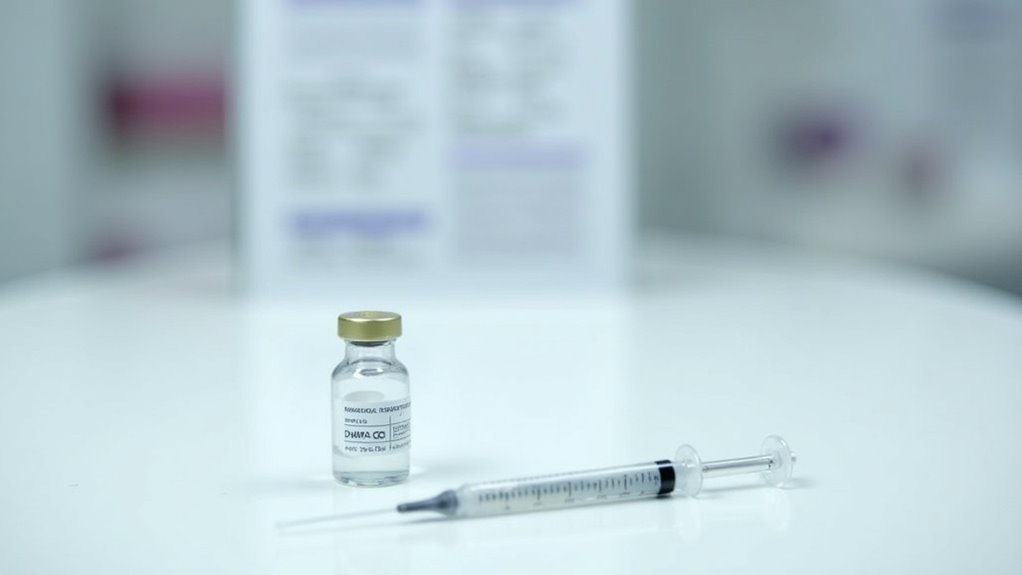

In a world where birth control options seem endless, self-injectable contraception is shaking things up—if only more people knew about it. Enter Depot medroxyprogesterone acetate (DMPA), a synthetic progestin that promises to keep pregnancies at bay for up to three months. Sounds great, right? Especially when you consider that the subcutaneous version, known as DMPA-SQ, can be injected just under the skin with a tiny needle.
Yet, despite its potential, many doctors aren’t offering this self-injection option. Why? Let’s explore.
First off, let’s talk effectiveness. DMPA-SQ boasts over 99% effectiveness with perfect use—so, it’s as reliable as that friend who always bails on plans last minute. Even under typical conditions, it holds strong at 96%. Depo-Provera, the injectable form of birth control, provides similar protection against pregnancy.
DMPA-SQ is over 99% effective—reliable as that friend who always bails, and 96% effective under typical conditions!
So, what’s the hiccup? Providers are still scratching their heads, unaware that patients could self-administer. Official labels insist on clinician-administered shots, even though self-injection has been a thing since 2004. Talk about a missed opportunity.
Then there’s the continuation rate. Patients who self-inject stick with it longer—326 out of 1,000 women compared to 304 for those relying on provider shots. That’s a significant difference! But still, only a quarter of reproductive health experts are on board with this self-injection revolution. It’s baffling.
And what about safety? Good news! No serious adverse events have been reported.
So where’s the catch? Some studies noted a few more injection site reactions with self-administered DMPA-SQ, but nothing that would send anyone running for the hills.
In the end, the barriers seem almost absurd. Providers lack awareness, and misinformation reigns supreme. Self-injectable birth control could change lives, but until more doctors get the memo, it remains a well-kept secret—one that’s just waiting to be revealed.