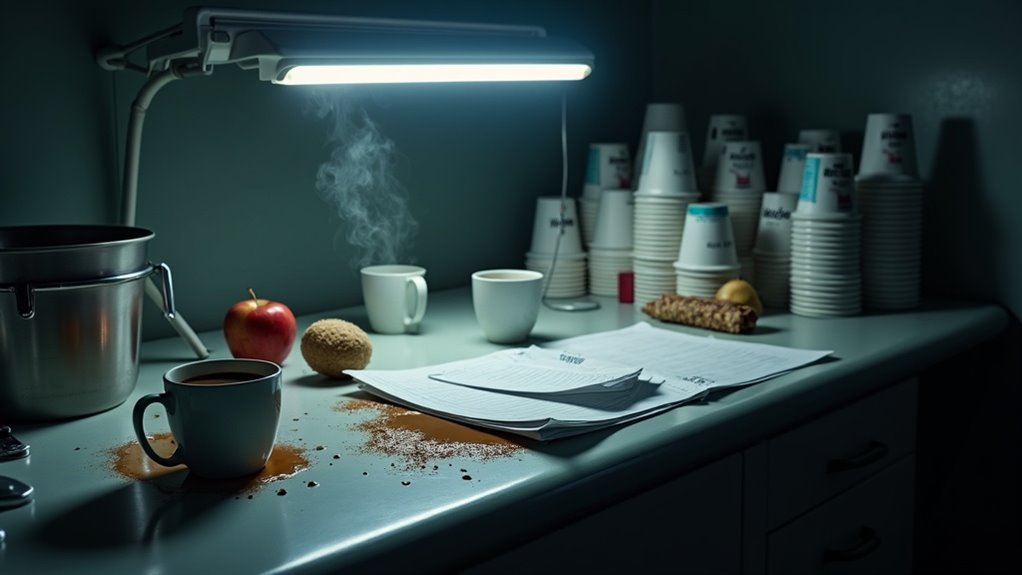


The irony is almost too perfect. ICU nurses, the people who dedicate their lives to healing others, are slowly poisoning themselves with the very substance they rely on to function. Coffee, that sacred elixir of the overnight shift, has become their enemy.
Nearly 20% of adults suffer from Caffeine Use Disorder. Among ICU nurses? The numbers are likely worse. These healthcare heroes face job stressors that would break most people, so they reach for another cup. And another. Daily caffeine intake ranges from 146 to 338 milligrams for regular folks, but ICU nurses blow past those numbers without blinking.
Women are hit harder by CUD than men. Younger nurses fare worse than older ones. Smokers? They’re practically guaranteed to develop problems. It’s a perfect storm of demographics and desperation. With nurse turnover costs soaring nationwide, the addiction to caffeine only compounds the staffing crisis.
The physical toll is brutal. Sixty percent of heavy caffeine users report poor sleep quality. Withdrawal brings headaches, irritability, fatigue, anxiety, and constipation. Nearly 40% develop insomnia and caffeine dependence simultaneously. The sugar cravings hit 43% of users. Their bodies are fundamentally staging a revolt.
Psychologically, it gets darker. Emotional exhaustion and depersonalization increase CUD risk. Burnout becomes inevitable. The very people saving lives are drowning in psychological distress across multiple mental health domains. Research reveals genetic correlations between caffeine consumption and psychiatric disorders like anxiety and depression.
Here’s where it gets really twisted: caffeine becomes a coping mechanism for the problems it creates. Nurses turn to coffee to combat fatigue during demanding shifts, but CUD reduces sleep quality and impairs cognitive function. Poor performance leads to more stress, which triggers more caffeine consumption. It’s a vicious cycle disguised as productivity.
The most disturbing part? Nobody sees it coming. One-tenth of ICU patients were unaware of their own caffeine consumption. Healthcare staff suffer from the same blind spot. Knowledge gaps about excessive intake risks are massive. Routine caffeine use is so normalized in hospitals that the danger becomes invisible.
ICU patients showed willingness to participate in caffeine-related clinical trials, suggesting openness to intervention exists. But first, someone has to acknowledge the problem. These nurses are fighting for everyone’s life except their own.