
As researchers plunge into the mind-bending world of psilocybin, they’re uncovering some seriously fascinating effects on depression. This isn’t just about funky visuals and out-of-body experiences. No, psilocybin appears to be doing some heavy lifting in the brain. It primarily works by hitting serotonin 2A receptors (5-HT2AR). Think of it as a ticket to a neuroplasticity concert—one that might just help lift the fog of depression.
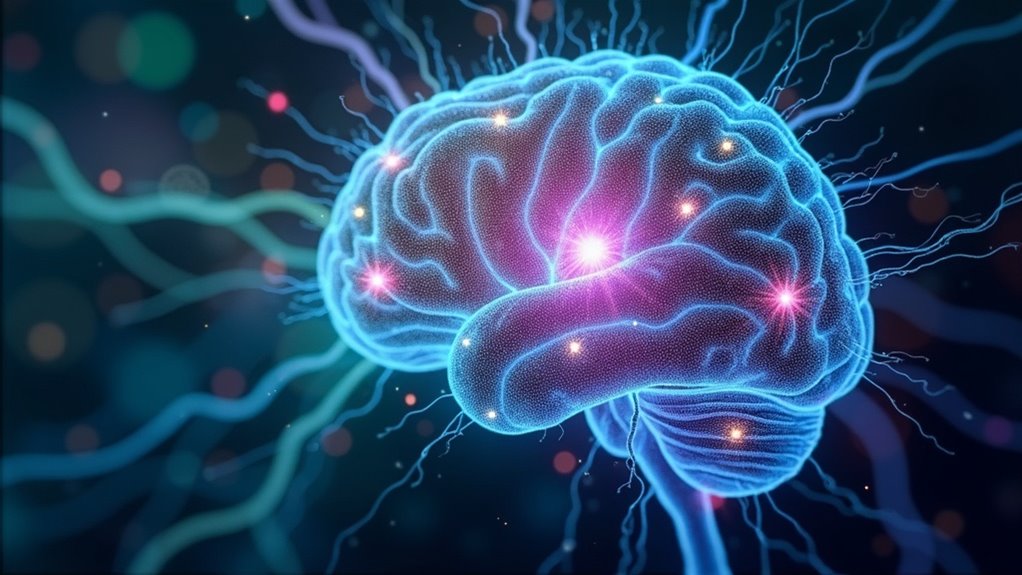
When 5-HT2AR gets activated, it shakes things up. It disrupts thalamic gating, enhancing communication between brain areas. Sensorimotor cortices get in on the action, flooding the system with sensory info instead of letting top-down expectations dictate everything. It’s like flipping the script on a tired old play.
Plus, psilocybin reduces connectivity modularity in large brain networks, especially the default mode network. This network has a nasty habit of fueling depressive rumination. Talk about a party crasher!
After psilocybin therapy, something interesting happens. Increased connectivity between brain networks correlates with fewer depression symptoms. Unlike traditional SSRIs, psilocybin lets the amygdala respond to emotional stimuli. This means patients might actually process their feelings during therapy instead of numbing out.
Post-psilocybin therapy, brain connectivity improves, allowing emotional processing and reducing depression symptoms—a refreshing shift from traditional treatments.
But wait, there’s more! Psilocybin seems to weaken those pesky cortico-cortical feedback loops that keep folks stuck in a cycle of negativity. It’s like a “break glass in case of emergency” move for mental health. Recent studies have shown that psilocybin reduces the connectivity of these feedback loops, which are linked to negative thinking.]
Plus, studies show that brain rewiring from psilocybin depends on the brain’s baseline activity levels.
Oh, and let’s not forget the pain-depression link. A single psilocybin dose can tackle pain and depression simultaneously. Talk about multitasking!
Neuroimaging studies reveal rapid brain changes post-psilocybin. Increased cross-network integration and disrupted default mode connectivity are just a few hallmarks of these effects. It seems psilocybin is rewriting the rulebook on how we perceive and treat depression. Fascinating stuff, right?