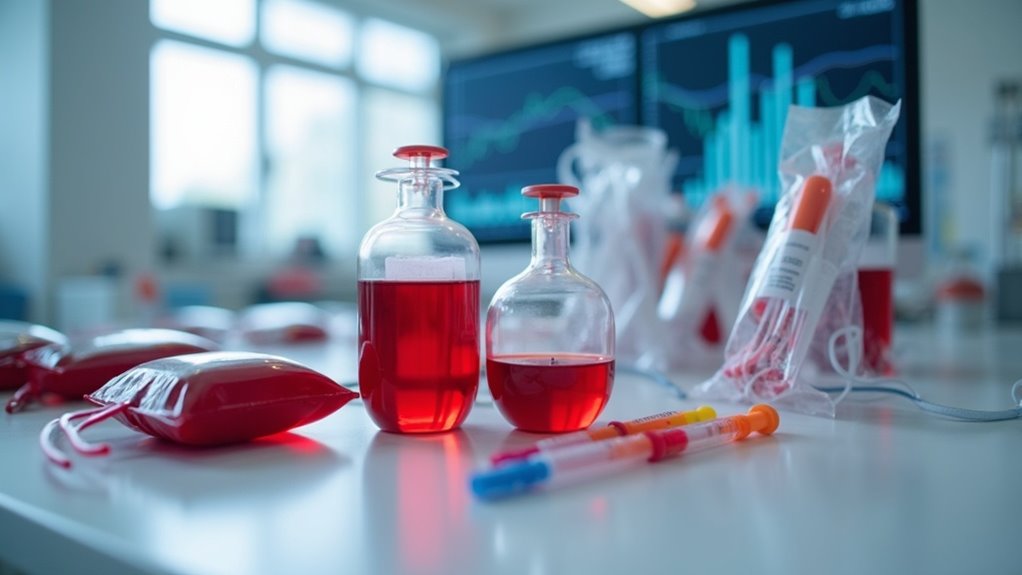

Transfusion protocols have come a long way, and it’s about time. Gone are the days when a blanket rule of 10 g/dL hemoglobin determined the fate of patients. Let’s be real—using the same threshold for everyone is like using the same shoe size for every person. Ridiculous, right?
Modern guidelines have shifted to a more sensible approach, advocating for restrictive protocols with thresholds between 7 and 8 g/dL for stable patients. This isn’t just a guess; it’s backed by evidence showing fewer complications and better use of resources. Who doesn’t want to avoid unnecessary risks?
Modern guidelines promote a smart, evidence-based approach with restrictive transfusion thresholds of 7 to 8 g/dL for stable patients.
Now, let’s talk about when you actually need a transfusion. Symptomatic anemia—think shortness of breath, dizziness, or heart failure—definitely raises red flags. If your hemoglobin dips below 8 g/dL and you’re stable, they might consider a transfusion. Packed RBCs can increase hemoglobin by 1 g/dL, providing essential oxygen delivery.
But if you’re actively bleeding or facing some invasive procedure, it’s a different ball game. Platelet and plasma transfusion guidelines are also pretty strict. If your platelet count drops below 50 x 10⁹/L and you’re hemorrhaging, it’s time to act.
And then there’s trauma. Massive transfusion protocols have made a splash by delivering blood products in ratios like 1:1:1. Because when you’re in shock and bleeding out, every second counts. They don’t have time for anything less than a well-oiled machine in those situations.
Blood warmers? Check. Rapid transfusion devices? Absolutely.
Preoperative assessments have turned into a must. Correcting anemia before surgery is smart, reducing the need for transfusions. Who wouldn’t want to minimize that?
Yet, some might still cling to those rigid thresholds. Why? Individualized care is the name of the game. Tailoring protocols to the patient’s unique needs is where the future lies. It’s about time medicine caught up with common sense.