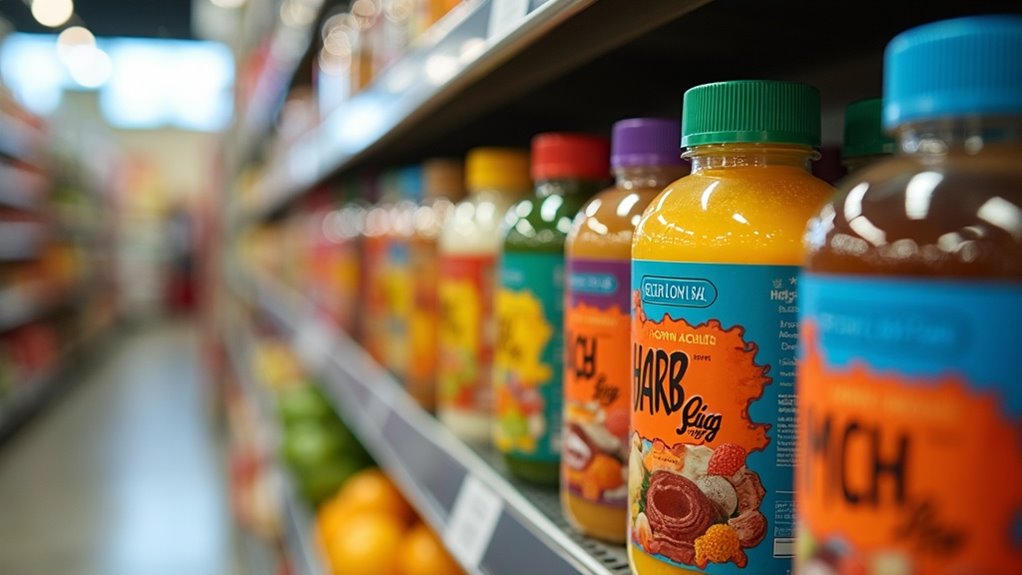

Additives in food are like that mysterious ingredient in grandma’s secret recipe—essential, yet often misunderstood. They serve a purpose, but let’s face it, they can feel a bit sketchy. In the world of modern food, nearly 3,000 direct additives are crammed into products lining supermarket shelves.
Preservatives like sodium nitrite and calcium sorbate are there to fight off spoilage. Sounds noble, right? But who wants to think about their lunch battling bacteria?
Color additives strut in, promising to make food look more appealing. Yellow 5 and beta-carotene might help a dull dish pop, but one has to wonder—what’s wrong with a little natural hue?
Flavor enhancers like MSG love to crash the party, turning bland into bold. You’ve probably tasted it in frozen dinners and salty snacks. But is it magic or just manipulation?
Then there are emulsifiers like soy lecithin, uniting ingredients that would rather stay apart. It’s like a food chemistry class gone rogue.
Stabilizers and thickening agents, such as guar gum and gelatin, are the unsung heroes, maintaining that creamy texture in ice cream. Who wants a lumpy dessert? Not anyone with taste.
But wait, there’s more: high-fructose corn syrup sneaks into sodas and processed drinks, whispering sweet nothings to your taste buds. You might think that’s harmless, but it’s more common than a bad joke at a family gathering.
Acids like citric and acetic are thrown in for good measure, adding zing to everything from candy to margarine. Research into the cumulative effects of additives is ongoing, particularly regarding their potential health implications. Common additives like citric acid are not just flavor enhancers but also help preserve food.
In this labyrinth of additives, consumers are left with questions. Are these ingredients safe? Do they really enhance our food? Or are we just munching on a chemical circus?
It’s a tough call. With scientists diving deep into the world of food additives, it’s clear that understanding what’s on the label isn’t just for nerds—it’s for anyone who eats. And that’s all of us.