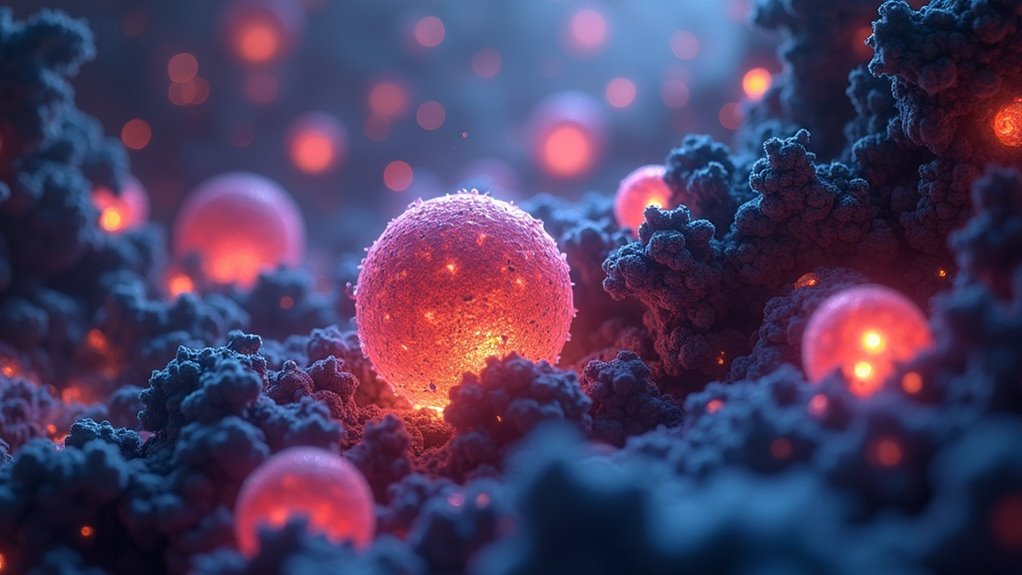

In the bustling world of cells, a surprising discovery has emerged: a new membraneless organelle called the BAG2 condensate. This little guy is like the cleanup crew at a messy party, swooping in to deal with faulty proteins when things get chaotic. You know, like when your friend spills soda all over the floor and someone has to mop it up. Advanced imaging techniques have made it possible to visualize these previously invisible structures, and wow, they are more sophisticated than anyone thought. Membraneless organelles? Who knew cells could be this rebellious?
These BAG2 condensates are essential for maintaining protein quality. They target misfolded or damaged proteins for disposal, making sure the cellular environment doesn’t turn into a toxic wasteland. But here’s the kicker: when these cleanup systems go awry, it can lead to neurodegenerative diseases like Alzheimer’s and Parkinson’s. Talk about a high-stakes job!
Autophagy, the main recycling process in cells, acts like a garbage bag for unwanted components. It’s all about breaking down and recycling, but it’s not as simple as putting trash in a bin. Specific proteins send signals that kickstart this process, making autophagy a carefully controlled operation. As cells age, their efficiency plummets, leading to a buildup of protein junk. Understanding these structures isn’t just a number; it’s a mess! Dysfunction in this process can result in the accumulation of waste in diseases like (Parkinson’s and Alzheimer’s).
Now, let’s not forget about lysosomes. These are the cell’s digestive organelles, breaking down waste like a pro. When lysosomes fail, it’s like having a dishwasher that leaks—everything starts to pile up, and nobody wants that. Enhancing lysosomal function could be the golden ticket for combating age-related issues.
In this chaotic world of cellular cleanup, the BAG2 condensate stands out. It’s a demonstration of the complexity of cellular life and a reminder that even the tiniest structures can have a massive impact. So, here’s to the BAG2 condensate—saving cells from themselves, one misfolded protein at a time.