While people obsess over organic kale and probiotic supplements, they’re breathing in microscopic particles that are quietly wreaking havoc on their gut bacteria. Air pollution doesn’t just hurt lungs. It’s systematically dismantling the delicate ecosystem in our intestines, messing with Nobel Prize-winning immune regulators called Tregs that keep inflammation in check.
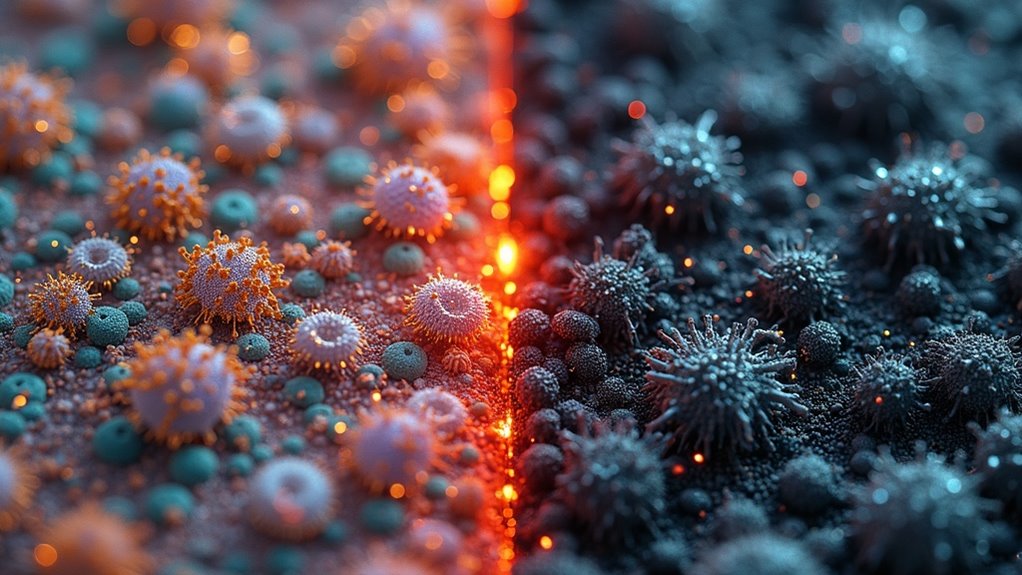
Particulate matter from car exhaust and industrial emissions alters gut microbiome composition in ways that sound like a bacterial horror story. The good guys get kicked out while the troublemakers move in. Beneficial bacteria like *Akkermansia muciniphila*, which have anti-inflammatory superpowers, take a beating. Meanwhile, pathogenic species like *Campylobacter* and *Mucispirillum* throw a party in your gut. With nursing shortages reaching critical levels globally, healthcare systems struggle to address these emerging health challenges.
Pollution kicks out your gut’s good bacteria and rolls out the red carpet for inflammatory troublemakers instead.
Heavy metals make things worse. Cadmium wipes out helpful *Bifidobacterium* and *Lactobacillus*. Mercury shuffles the deck completely, boosting *Clostridium* and *Helicobacter* while slashing Proteobacteria populations. Lead pollution? It’s got its own signature bacterial fingerprint, ramping up *Marvinbryantia* and *Ruminococcus*.
Here’s where it gets interesting. Gut microbiomes in heavily polluted areas actually adapt, developing enhanced genes for breaking down contaminants. It’s like bacterial evolution on steroids. These microbes become pollution-processing machines, complete with specialized degrading functions. Cool party trick, terrible health consequences. Machine learning models can now distinguish between pollution exposure levels based solely on gut bacterial signatures.
The fallout is brutal. Pollution-altered microbiomes increase obesity, type 2 diabetes, and gastrointestinal disorders. The gut barrier becomes leaky, triggering systemic inflammation that wreaks havoc throughout the body. Butyrate-producing microbes, the ones that keep metabolic health humming, disappear after contaminant exposure.
Air pollutants slash Mucin 2 levels, causing focal epithelial damage and flooding the colon with inflammatory cells. Particulate matter interferes with protein metabolism and calcium signaling, fundamentally turning the intestinal lining into a war zone. This research demonstrates the environmental health connection between pollution exposure and human microbiome dysfunction.
People living in polluted regions show blood concentrations of dioxins and PCBs that correlate directly with their messed-up microbiomes. The bacterial profiles mirror those seen in obesity and diabetes patients.