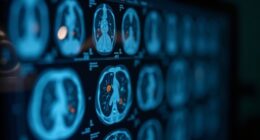
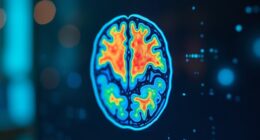
In the race against Alzheimer’s, early detection is everything—like spotting a lurking shark before it takes a bite. Machine learning (ML) is diving deep into brain scans and clinical data, and guess what? It’s getting pretty good at predicting Alzheimer’s up to seven years before symptoms hit. With a solid 72% predictive power, researchers at UC San Francisco are showing that early warning signs are not just a pipe dream.
But wait, there’s more. Support vector machines (SVMs) using watershed segmentation have hit an impressive 96.25% accuracy in classifying dementia stages from MRI images. That’s right—96.25%!
Meanwhile, deep learning models focused on fewer slice regions are flexing their predictive muscles, improving performance for Alzheimer’s and cognitive normality tasks over 90%. It’s like having a crystal ball for brain health.
High cholesterol? It’s not just about heart health anymore. It’s the strongest influencer in predicting Alzheimer’s risk from clinical data.
High cholesterol isn’t just a heart issue; it’s a key predictor of Alzheimer’s risk lurking in clinical data.
And osteoporosis? Well, that’s a specific red flag for women, linking bone health to dementia risk. Talk about a surprise twist. The real kicker? Combining co-occurring diseases gives models a better shot at accurate predictions rather than just looking at one condition at a time.
So, while ML algorithms like SVMs, random forests, and convolutional neural networks are powering through data, it’s the clever use of features that’s really making waves. Watershed segmentation is enhancing MRI feature extraction, focusing on brain areas that get hit first by Alzheimer’s.
Moreover, the Alzheimer MRI Dataset is a crucial resource for researchers looking to improve detection techniques in this field.
Plus, multimodal datasets are pulling in clinical, biomarker, and neuroimaging information, giving a fuller picture.
Yet, the big question remains—what are clinicians missing? With AI spotting patterns in patient records, it’s a race against time. Those early signs are there, waiting to be noticed.
In a world where every second counts, it’s time to pay attention.