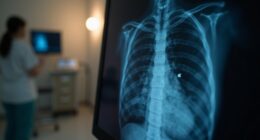
Lung cancer isn’t just a smoker’s disease. In fact, 10% to 20% of lung cancers in the U.S. happen in people who have never touched a cigarette. That’s about 20,000 to 40,000 cases each year. Globally, nearly one in four lung cancer cases pops up in never-smokers. So while everyone’s busy blaming the smokers, the cancer just doesn’t care. It’s like that uninvited guest at a party who eats all the snacks.
And guess what? Lung cancer rates among never-smokers are on the rise. Yep, despite fewer people puffing away, more never-smokers are getting hit with this awful diagnosis. Women, particularly those of Asian descent, and folks with family histories of cancer are at the highest risk. It’s a cruel twist of fate.
But how does this happen? Well, secondhand smoke is a sneaky culprit, raising the risk for spouses of smokers by 25%. Then there’s radon gas, which is like the silent killer lurking in homes, causing around 2,900 cases in the U.S. each year. Additionally, air pollution contributes significantly to the rising risk, making it imperative to monitor local air quality. Recent studies have shown that high fine-particle air pollution exposure is linked to increased genetic mutations associated with lung cancer.
Air pollution? That’s another problem, with fine particles from cars and factories playing their part. Asbestos and workplace toxins are also no picnic.
And let’s not forget about genetic factors—if lung cancer runs in the family, watch out. Radiation therapy increases risk for survivors too. It’s a tangled web of factors that don’t seem to care about the smoker vs. non-smoker debate.
Half to nearly two-thirds of lung cancers in never-smokers are adenocarcinomas, which arise in those air sac cells. So, while the world worries about smokers, lung cancer is taking a detour, hitting innocent bystanders.
There’s a lot we still don’t understand, though. Many never-smokers can’t pinpoint what caused their cancer. It’s a mystery. One thing’s for sure: lung cancer in never-smokers is a growing issue, and it’s about time the spotlight shines on them.