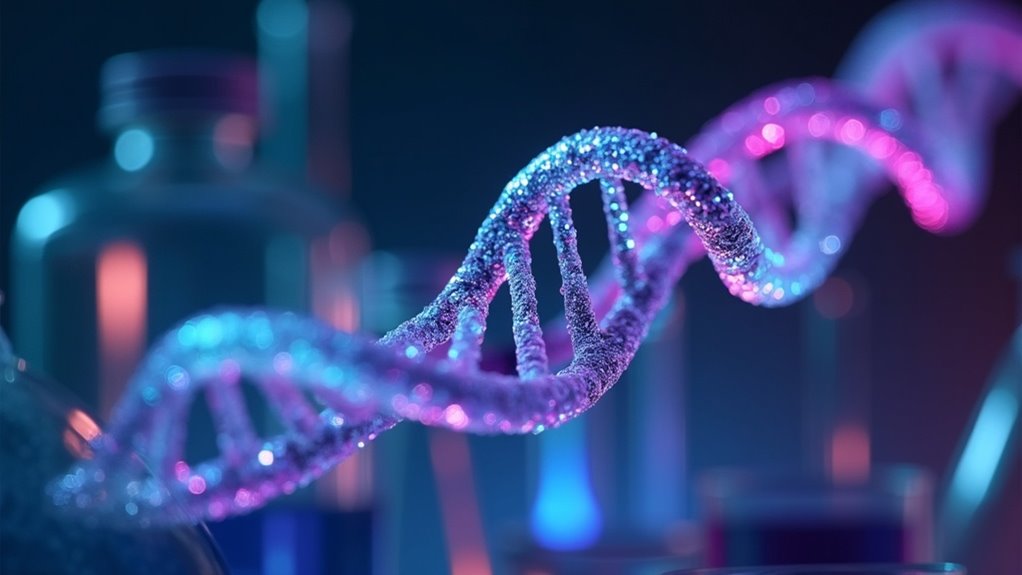

In a world where genetic medicine is often dominated by double-stranded DNA, one might wonder how something as seemingly odd as circular single-stranded DNA (cssDNA) could possibly shake things up. But lo and behold, cssDNA has emerged from the shadows, revealing itself as an ancient nucleic acid form that once ruled the roost.
It’s a forgotten hero, now stepping into the spotlight as a potential game-changer in therapeutics. Seriously, this stuff has properties that might just redefine gene editing and immune cell therapy.
Why should one care? Well, cssDNA boasts impressive stability. Its circular structure laughs in the face of exonuclease T, which typically loves to munch on linear DNA. Even after 42 freeze-thaw cycles, cssDNA holds its ground. Additionally, cssDNA has demonstrated high integration efficiency of about 70% in various cell types, showcasing its effectiveness. Furthermore, cssDNA is capable of treating genetic diseases and cancers, making it an attractive option in the realm of genetic therapies.
It’s also less toxic than its double-stranded counterpart and outshines RNA in durability. Talk about resilience! And let’s not forget its capacity for hefty payloads, accommodating sequences up to 20 kb. Good luck finding a viral vector that can handle that kind of weight.
When it comes to efficiency, cssDNA doesn’t mess around. With gene integration rates between 50-70% in tricky cell types like iPSCs and immune cells, it leaves conventional double-stranded DNA in the dust.
Who knew gene editing could be this effective? It even manages to insert entire genes—up to a massive 10,000 nucleotides—without breaking a sweat.
Safety-wise, cssDNA shines brightly. It’s non-viral, meaning fewer risks and higher cell survival rates. Lower toxicity? Yes, please! This approach sidesteps the limitations of traditional vectors, and a U.S. patent guarantees its unique modifications are protected.
As partnerships with pharmaceutical companies grow, cssDNA could soon become the go-to for tackling genetic disorders, cancers, and more.