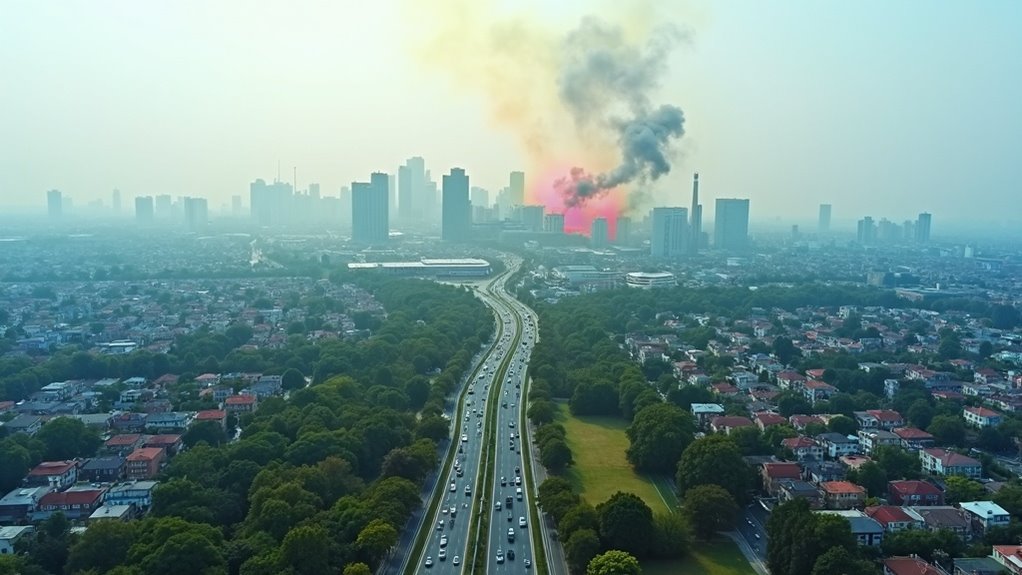
In a world where air quality can make or break a neighborhood, home address pollution mapping is stepping up to the plate. This is not just about pretty maps; it’s about life and death, mobility and disability. Researchers are using advanced machine learning techniques, pulling data from over 850 monitoring stations, weather patterns, and traffic reports to create daily maps. They’re not just guessing here. They’re combining all this info to predict where pollution lurks, especially in disadvantaged communities. Let’s talk numbers. Nitrogen dioxide (NO2) and particulate matter (PM2.5) are the usual suspects, tracked meticulously with fancy gadgets. They’re measuring everything from ultrafine particles to ozone levels. And guess what? Disadvantaged neighborhoods often bear the brunt of this pollution. Shocking, right? It’s like being dealt a bad hand in a rigged game. The data doesn’t lie; it shows that lower-income areas suffer more from air pollution than wealthier ones. Hyperlocal monitoring can pinpoint pollution hotspots, sometimes down to just 30-60 meters. Yes, that’s just a stone’s throw away. Researchers have been linking pollution to mobility loss. They discovered that higher pollution levels correlate with declining physical abilities. Additionally, the study found that disadvantaged communities consistently showed higher levels of NO2 and PM2.5 exposure compared to wealthier neighborhoods. So, if you think your address doesn’t matter, think again. Your street could directly impact your health. It’s not just about statistics; it’s about real lives. They’ve integrated pollution levels with census data to analyze race, ethnicity, and income. The disparities are alarming. This mapping isn’t just a fad. It’s a serious tool for targeting pollution sources and advocating for clean air solutions. It shows how reducing pollution can actually help reverse disability. Who knew that cleaner air could mean a shot at better mobility? The research is clear: pollution isn’t just an environmental issue; it’s a public health crisis that demands attention.