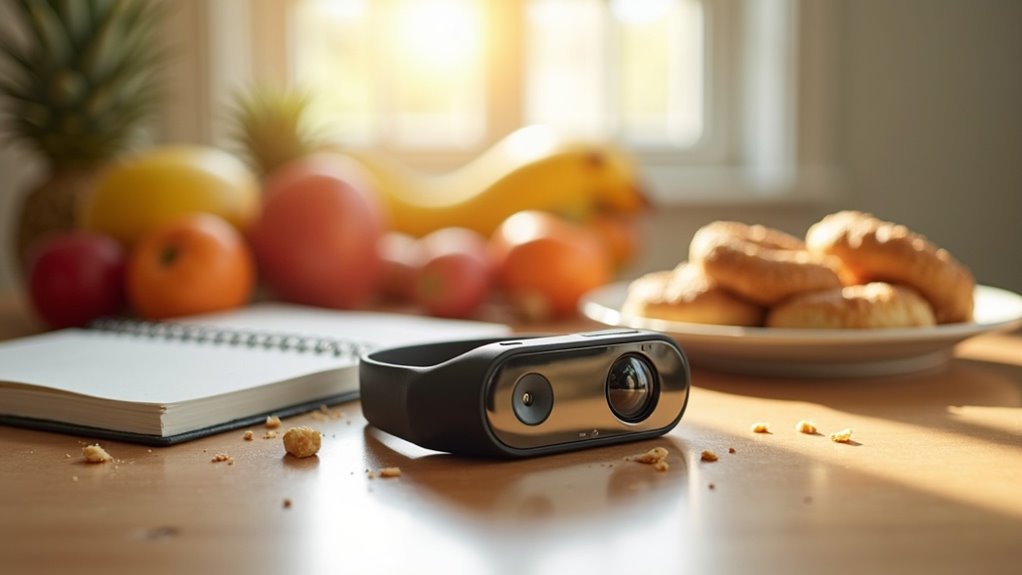

In the world of diet tracking, traditional methods like 24-hour recalls have a dirty little secret: they’re infamously inaccurate. Yes, that’s right. Those self-reported food diaries? They’re lying. A study revealed a staggering number of underreporting errors—forty-four to be exact—across just twenty participants. That’s almost two errors per person, folks. And guess what? Most of those omissions were real food items that people actually consumed. Water? Forget it. It’s often left off the list. But don’t worry, those wearable cameras catch every drop.
Discretionary snacks? They’re like ghosts. You know they’re there, but they vanish from memory. Both app-based and recall methods consistently missed them. And it turns out this underreporting happens equally on weekends and weekdays. So, no excuses. It’s a systematic issue, not just a case of “oops, I forgot.”
Discretionary snacks are elusive, consistently overlooked by both app-based and recall methods, revealing a systematic issue in diet tracking.
Now let’s talk numbers. Camera-assisted recalls revealed energy intake levels that were shockingly higher—9304.6 kJ/d compared to traditional methods. That’s not small potatoes. Carbohydrates and sugars also showed significant hikes when documented with wearable cameras. And saturated fats? They were remarkably higher too. Who knew cameras could be such revealing friends? This technology not only enhances accuracy but also helps to address the issue of under-reporting. As it turns out, the integration of modern tools like wearable cameras proves to be essential for improving dietary data collection.
These nifty gadgets do more than just catch what people eat; they capture how they eat. Chewing rates, eating speeds—real-time visual documentation takes the guesswork out of portion sizes. Let’s face it, estimating portion sizes on your own is like trying to guess how many jellybeans are in a jar. Good luck with that.
With these cameras, underreporting drops by about forty percent. And get this: 87 percent of the misreported items from dietary recalls were due to underreporting. That’s a staggering number. In this era of technology, why settle for inaccuracies? Wearable cameras don’t just show what people eat; they expose the truth. And that truth? It’s a game changer.