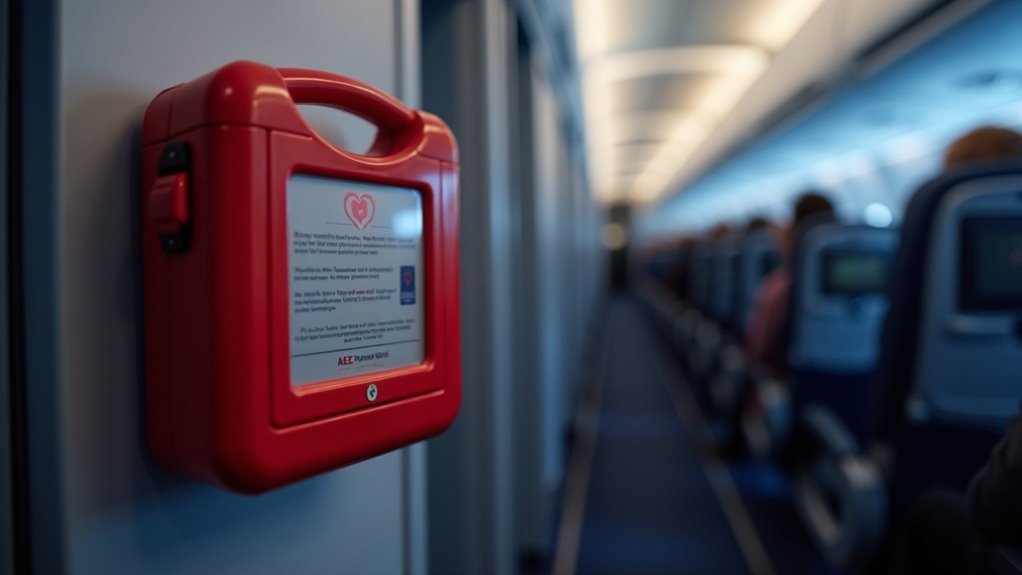

When it comes to flying, most people think about turbulence, snacks, or the mystery of airplane bathrooms, not cardiac arrests. But here’s a wake-up call: people do have heart attacks on planes. In fact, around 2,000 travel-associated cardiac arrests happen every year. That’s right—while you’re munching on pretzels, someone could be fighting for their life.
Studies reveal that when an Automated External Defibrillator (AED) is available, survival rates can skyrocket. For cases of ventricular fibrillation or tachycardia, survival can be as high as 50%. Without one? Those odds plummet to about 6%. Why the difference? AEDs are lifesavers—literally. They can detect lethal arrhythmias with nearly perfect accuracy and have been shown to terminate ventricular fibrillation in all documented cases when used. Additionally, rapid defibrillation has been shown to significantly improve survival rates, emphasizing the crucial role of AEDs in emergency situations.
Survival rates soar to 50% with AEDs in cardiac emergencies, compared to just 6% without. They’re true lifesavers in the sky!
Yet, not all planes are equipped with these devices. The FAA mandated AEDs on commercial flights back in 2004, but some countries, like Canada, just recommend them. Many European airlines don’t even have them onboard. Talk about a gamble! Imagine being stuck in the air, trying to remember CPR while the flight attendant fumbles with an AED.
A study showed that only a quarter of in-flight cardiac arrests happen on planes with AEDs, resulting in a 15% survival rate. That’s better than nothing, but still a far cry from the nearly 70% survival chance when an AED is used promptly. And guess what? AEDs work just fine during turbulence—so no excuses there. In-flight cardiac arrest accounts for up to 86% of air-related deaths, making the need for these devices even more pressing.
It’s time for a reality check. Airlines need to step up. The presence of AEDs on every commercial flight should be non-negotiable. With thousands of emergencies reported by the FAA, the need for these devices is clear. They save lives, and that’s what really counts when you’re soaring through the sky.