

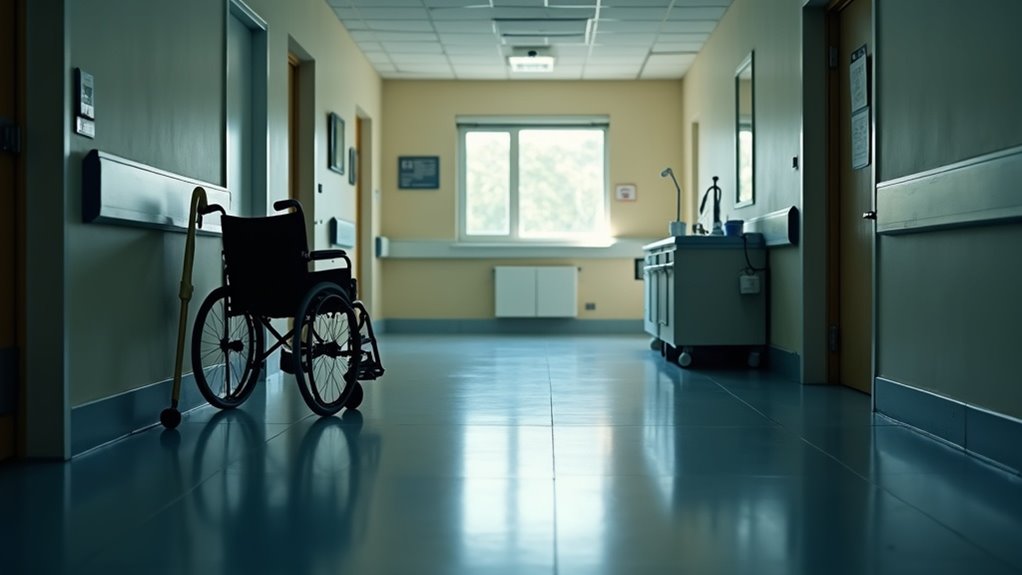
While healthcare professionals pledge to “do no harm,” the reality is far messier when it comes to older patients. About one in five Americans over 50 face discrimination in healthcare settings. Subtle stereotyping, overt bias—it’s all there, lurking beneath scrubs and stethoscopes.
Nurses aren’t immune to this ugly truth. In fact, some harbor surprisingly ageist attitudes. The data doesn’t lie. Nurses with less gerontological education score higher on ageism measures. Nurse assistants show more bias than registered nurses. Even ward assignments matter—internal medicine units see higher ageism rates than surgical ones. Long-term care facilities are increasingly becoming frontline battlegrounds for addressing ageist attitudes as patient populations age.
Marriage status, religious beliefs, years on the job. These factors all influence how nurses view elderly patients. Weird, right? Knowledge and education help combat bias, but married nurses and those in ICUs sometimes express more negative attitudes toward older adults. Go figure.
The consequences are brutal. Nurses with ageist views may provide suboptimal care, make assumptions about recovery potential, or skip rehabilitation interventions entirely. They stereotype. They prejudge. They create health inequalities through subtle neglect and dismissive communication. These aren’t cartoon villains—they’re healthcare professionals making split-second decisions based on unconscious bias.
Healthcare professionals making split-second decisions based on unconscious bias aren’t cartoon villains—they’re real people creating devastating health inequalities.
Here’s the kicker: ageism correlates with burnout. Nurses harboring negative attitudes toward older patients experience higher exhaustion rates, decreased job satisfaction, and feelings of helplessness. The bias becomes a toxic feedback loop, poisoning both caregiver and patient relationships. Female nurses face particularly elevated burnout risks when ageist attitudes are present.
Older nurses face their own battle. They’re overlooked for promotions, stereotyped as slow or inflexible, and pushed toward career exits by hostile work environments. The profession literally eats its experienced members.
But there’s hope buried in the research. Nurses who volunteer with older adults show less ageism. Those who actually prefer geriatric nursing—shocking concept—demonstrate fewer biased attitudes. Experience matters too. Seasoned nurses with proper education tend to shed their prejudices. Evidence-based practices help clinicians move beyond age-related assumptions toward individualized patient care.
The uncomfortable truth? Nursing does harbor ageism. It’s measurable, documented, and affecting patient care daily. Personal anxiety about aging fuels discriminatory behavior. The profession that promises healing sometimes perpetuates harm through bias, whether conscious or not. Recognizing this reality represents the first step toward meaningful change.