
When someone’s heart stops, every second counts. It’s a race against time, and the stakes couldn’t be higher. Enter CPR, or cardiopulmonary resuscitation. This emergency procedure is the difference between life and death when breathing or a heartbeat has given up the ghost. It’s not just about pushing on a chest; it’s a combination of chest compressions and artificial ventilation—think of it as giving the heart a nudge while ensuring oxygen keeps flowing to the brain and other essential organs.
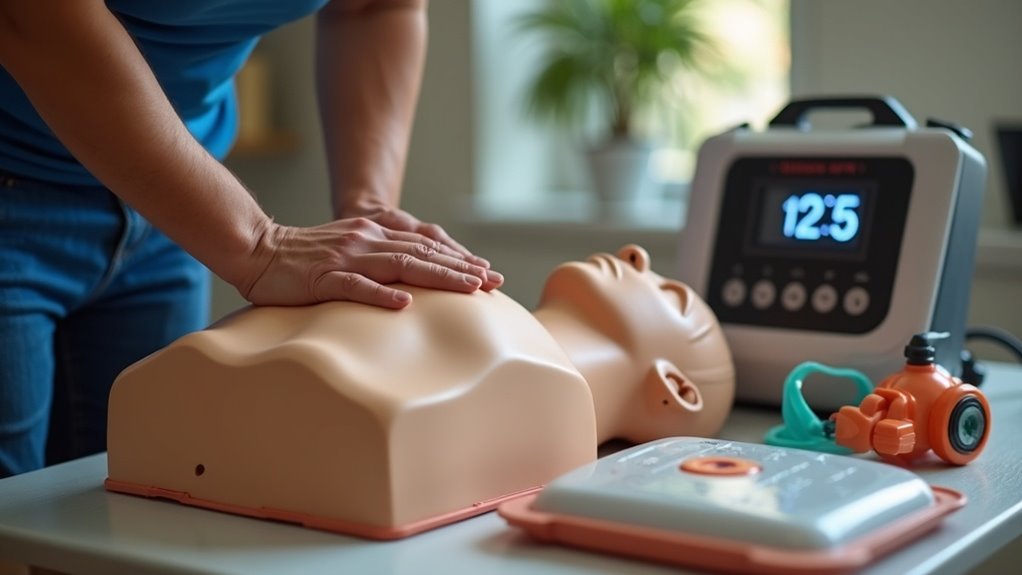
The mechanics are straightforward. Chest compressions push down on the sternum, simulating heartbeats. Aiming for a depth of about 5–6 cm, the goal is to keep blood moving. And you need to keep that rhythm going at 100 to 120 compressions per minute. That’s right, it’s a workout, but it’s one you’re glad to be doing. For the untrained bystanders out there, hands-only CPR is the way to go. It’s simple and increases the chances of survival. Compression-only CPR has been shown to have equal or higher success rates compared to standard CPR, making it a vital option for untrained rescuers. Emergency department visits can provide critical data for understanding the effectiveness of CPR in real-world scenarios.
Why all this fuss? Because CPR can double or even triple survival chances if done immediately after cardiac arrest. We’re talking about around 350,000 cardiac arrests happening in the U.S. each year. It’s a sobering statistic, and without intervention, survival rates plummet. So yes, knowing how to perform CPR can be the difference between a tragic statistic and a second chance at life.
CPR is also about timing. Immediate action is essential. You need to recognize when someone is unresponsive, not breathing, or gasping for air. Those are your red flags. Emergency operators can provide guidance during CPR situations, further emphasizing the importance of acting quickly.
Yet, despite all the training, survival rates remain frustratingly low. Public knowledge about CPR is critical. We need to be ready to jump into action—because when the heart stops, every second, quite literally, counts.