
What happens when the very substance that’s supposed to chill you out leaves you feeling like you’ve been hit by a truck? Welcome to Cannabis Hyperemesis Syndrome (CHS), a not-so-fun party crasher for chronic cannabis users. This condition, marked by relentless nausea, vomiting, and abdominal pain, is the unfortunate outcome for some who thought they were just enjoying a laid-back experience with their favorite herb. The symptoms are cyclical, too, which is a nice touch—like a rollercoaster of misery that never really ends.
And let’s not forget the peculiar urge for hot baths; it’s like a bizarre spa day where the only treatment is temporary relief.
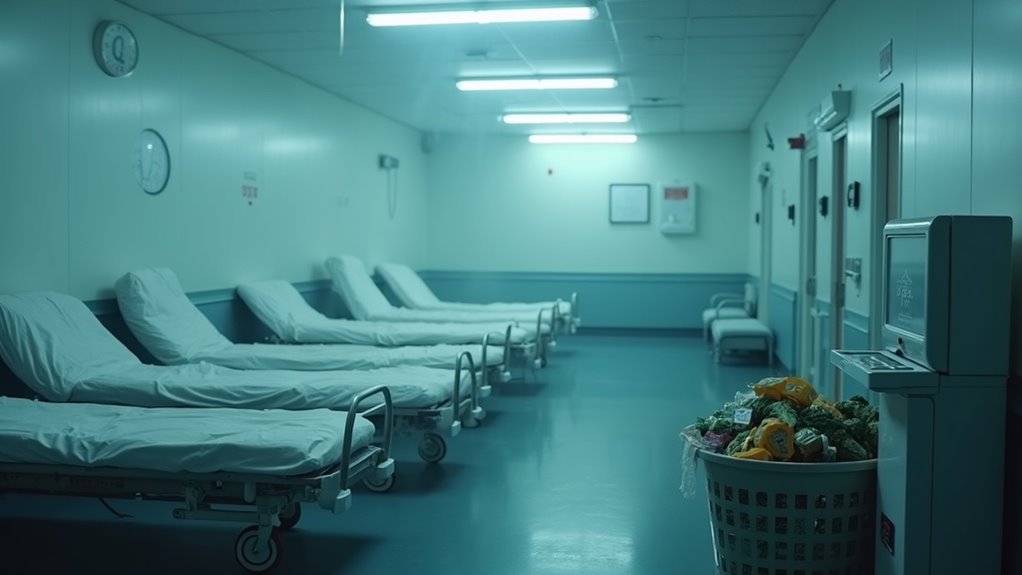
Between 2016 and 2022, the number of emergency department (ED) visits related to CHS skyrocketed fivefold. You read that right—fivefold! During the early pandemic days, these visits peaked even higher, as if everyone decided that a trip to the ER was the new norm. The numbers were staggering, jumping from 4.4 to 33.1 per 100,000 visits. The risk of CHS diagnosis increases with chronic and daily cannabis use, which could explain why so many users found themselves in this predicament. Many products, especially edibles, can exceed 20% THC, which likely contributed to the surge in cases.
It’s unclear if this surge was due to the increased THC potency in products or just a collective case of pandemic-induced poor choices, but either way, the hospitals were feeling the burn.
Young adults, particularly those aged 18–25, are taking the brunt of this mess, being 3.5 times more likely to experience CHS. Many had been regular users for years before the dreaded symptoms emerged. Ironically, these patients often had no significant gastrointestinal issues before their cannabis use.
As cannabis became more accessible with legalization, so did the risks. The average THC level skyrocketed from about 4% in the ’90s to 17% by 2017. Now, with edibles and concentrates on the rise, it seems many are playing a dangerous game.
The pandemic only exacerbated the situation, with stress and isolation leading to increased consumption. So, to summarize, CHS is the not-so-chill consequence of what was supposed to be a relaxing experience.