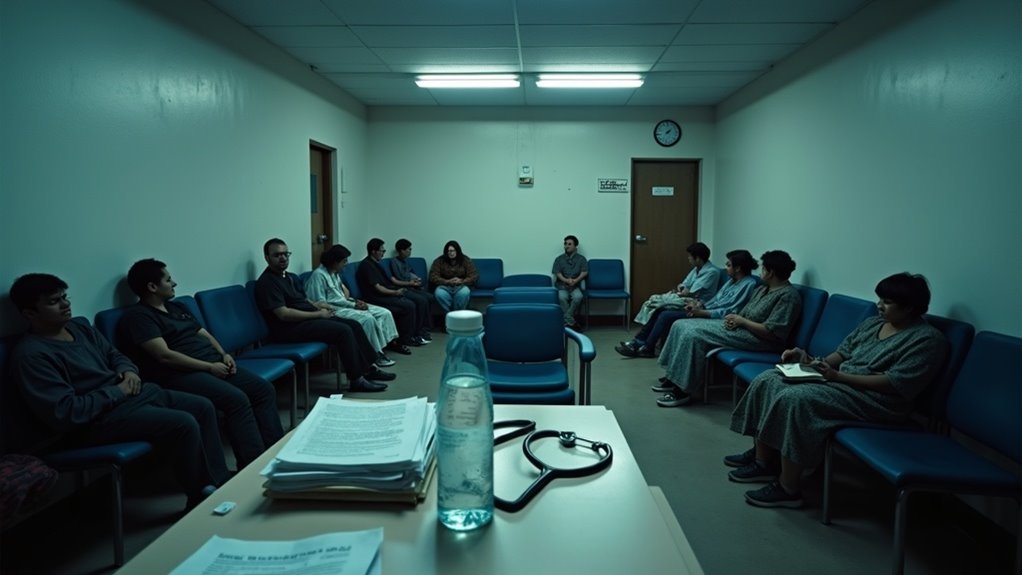

When homeless patients shuffle into emergency departments, they’re already fighting an uphill battle—and the triage system isn’t exactly rolling out the red carpet. The numbers paint a stark picture of what happens when society’s most vulnerable meet healthcare’s front lines.
Society’s most vulnerable patients face an uphill battle before they even reach the triage desk.
Homeless individuals are hitting emergency departments at rates up to 141 visits per 100 people annually. That’s not a typo. Compare that to the general population, and it’s clear something’s broken. But here’s the kicker—when they arrive, they wait longer. Way longer.
For non-urgent cases, homeless patients cool their heels for an extra 57 minutes compared to housed patients. Homeless women over 40? They’re looking at 82 additional minutes of waiting room purgatory. The irony is rich: the people who need healthcare most get pushed to the back of the line.
The bias isn’t subtle. Homeless patients report being automatically labeled as drug-seekers before they even open their mouths. Mental health issues, chronic pain, substance use—all get filtered through a lens of skepticism. Quality of care tanks when clinicians know someone’s housing status. Coincidence? Hardly.
Emergency departments are drowning in repeat visits from the same homeless individuals. Fifteen percent of homeless patients account for 75 percent of visits. This creates a vicious cycle—provider fatigue leads to stereotyping, which leads to worse care, which leads to more visits.
Triage nurses, buried under overcrowding and stress, aren’t immune to implicit bias. When you’re slammed with patients and see the same homeless faces cycling through, stereotypes creep in. Pain gets dismissed. Urgency gets questioned. Resources get rationed based on assumptions rather than medical need.
The emergency department becomes a revolving door for people who can’t access primary care. Mental health crises, addiction struggles, and untreated chronic conditions all funnel into the ED. But instead of addressing root causes, the system treats symptoms—both medical and social—with skepticism and longer wait times.
Systematic screening for housing insecurity remains rare, with only five percent of visits flagging homelessness. How can healthcare systems address bias they refuse to measure? The answer seems increasingly clear: they can’t. Additionally, the healthcare system faces workforce shortages that exacerbate these challenges, limiting the ability to provide timely and equitable care.