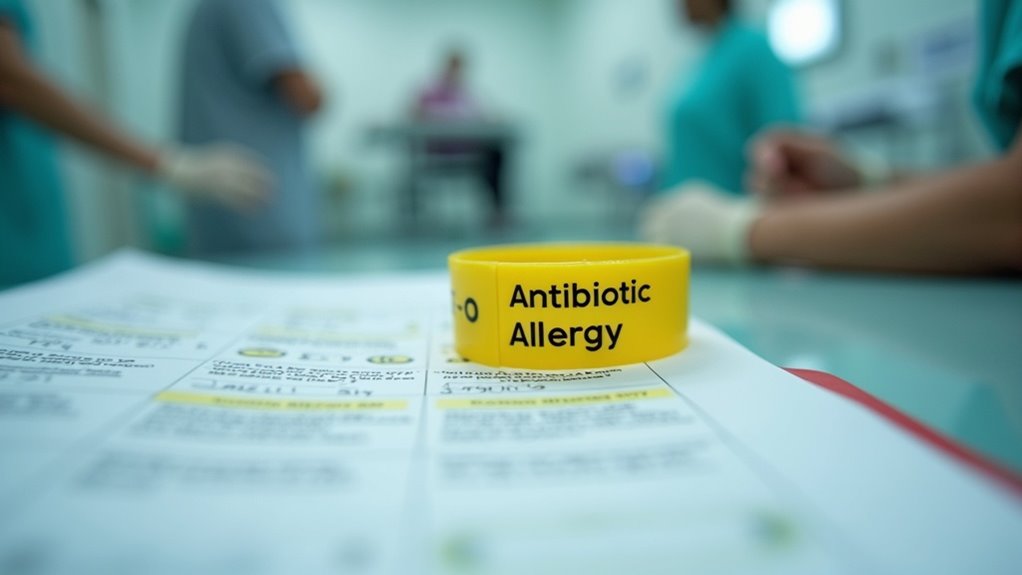

Antibiotic allergy labels are everywhere, and they’re often as trustworthy as a used car salesman. Seriously. A staggering 3-16% of hospitalized patients proudly wear these labels like badges of honor, but guess what? About 90% of them are inaccurate after a full allergy work-up. Talk about a red flag! The majority of these labels don’t even reflect reality. Many adults and kids are slapped with multiple antibiotic allergies, while only 20% of hospitalized adults have appropriate allergy labeling. So much for accuracy.
Now, let’s dig into the clinical impacts. Those pesky labels lead to increased use of broad-spectrum antibiotics. This means longer hospital stays, higher ICU admissions, and let’s not forget elevated readmission rates and mortality risks. Oh joy! It’s a vicious cycle, all because someone decided a long time ago that penicillin was the enemy. The reality is, over 90% of patients will tolerate penicillin after formal testing. But no one seems to care about that little detail. The true allergy rates are so low that it raises serious questions about the reliability of these labels. Approximately 27 million individuals in the U.S. report antibiotic allergies, but many of them could actually tolerate the medications. Moreover, these inaccuracies have significant repercussions on healthcare systems, as evidenced by the journal’s focus on allergology and related immunopathology subjects.
Antibiotic allergy labels fuel unnecessary broad-spectrum use, leading to longer hospital stays and increased risks. Time for a reality check!
And don’t get me started on the economic costs. Antibiotic allergy labels inflate drug costs like a hot air balloon. Once someone is delabeled, those acquisition costs drop. Yet, healthcare expenses skyrocket for those stuck with broader antibiotic exposure. It’s a mess, really!
Delabelling methods exist, like oral provocation tests or blood tests. They’re effective, with a low adverse reaction rate. But let’s face it, verifying these vague labels from childhood? Good luck! History complicates everything.
Amidst rising resistance, delabelling is essential for antimicrobial stewardship. It’s about time to tackle this issue head-on. Update those electronic records and ditch the unnecessary broad-spectrum antibiotics. The world desperately needs a reality check when it comes to antibiotic allergy labels.