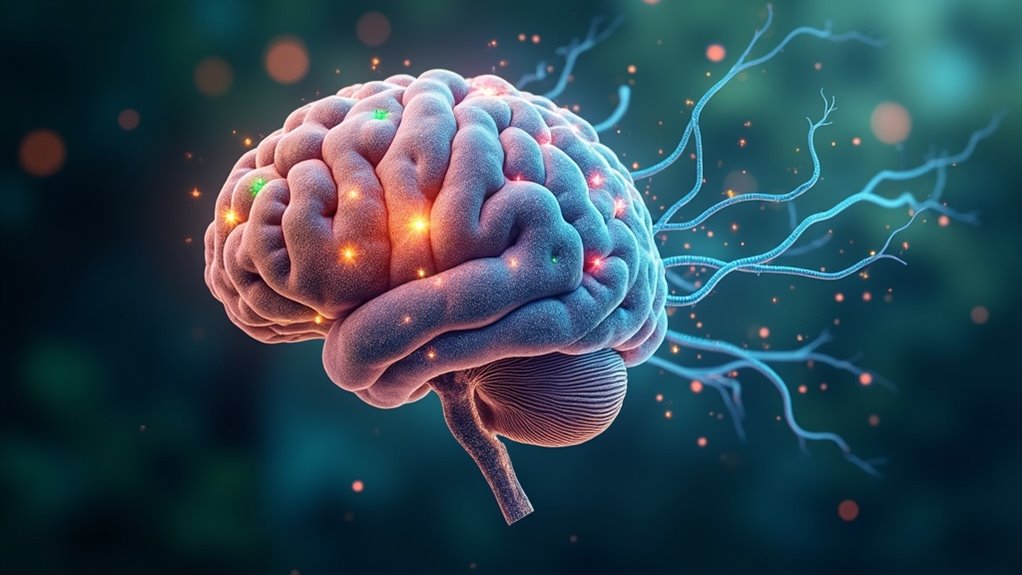

Neuroplasticity—it’s a fancy term that fundamentally means the adult brain is not as set in its ways as one might think. Forget the old idea that once you hit adulthood, your brain is a rigid, immovable fortress. Nope, it’s more like a constantly renovating house, updating its wiring and décor based on life experiences.
Morphological changes happen, neurons reshape themselves, and new connections spring up like weeds in spring. Yes, the adult brain can actually generate new neurons. Mind blown, right?
But wait, there’s more! Stress can really throw a wrench in this remodeling process. Chronic stress, for instance, has a way of enhancing dendritic branching in the amygdala, making those neurons party like it’s 1999.
On the flip side, it stifles growth in the hippocampus with a real kick to the gut—less branching means fewer connections, and that’s not great for memory or learning. The brain’s responses vary, which is a curveball, but those plasticity reactions? They can be reversed.
Let’s not forget about neurogenesis. Yes, it happens. The hippocampal dentate gyrus is a hotspot for new neurons, which are essential for memory and olfactory functions. Notably, the removal of SynCAM 1 can enhance plasticity, potentially aiding in treatments for conditions like autism. Moreover, recent findings indicate that brain circuit maturation continues beyond adolescence, further emphasizing the brain’s adaptive capabilities.
And guess what? Studies show that even in cancer patients, adult neurogenesis carries on. Talk about resilience!
Then there’s the role of good ol’ mechanical force. Ever heard of Piezo1? It’s a protein that senses these forces, helping astrocytes communicate with neural stem cells.
When Piezo1 is out of the picture, the dentate gyrus shrinks. Less neurogenesis? Not ideal.