Lung cancer screening sounds like a lifesaver, right? You walk in, get a quick scan, and voilà—potentially life-threatening cancers caught early.
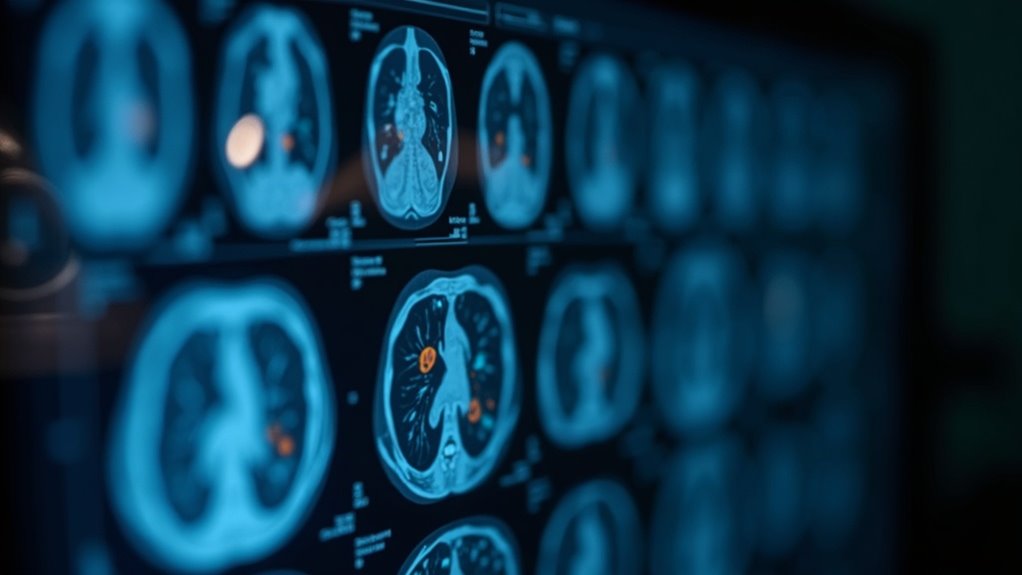
But wait, hold on. The reality is a bit murkier. The majority of nodules detected during low-dose CT (LDCT) screenings aren’t even cancerous. In fact, the false-positive rate can reach a staggering 58.2% in some studies. That’s a lot of extra scans for something that might just be a harmless bump.
The reality of lung cancer screening is complex; many nodules are harmless, with false-positive rates soaring to 58.2%.
And then there’s the overdiagnosis issue. Out of 40 diagnosed lung cancers, 7 wouldn’t cause any illness or death. So, what’s the point? Sure, there’s a lung cancer mortality reduction of 20-26%, but at what cost? Unnecessary interventions, that’s what. The math isn’t exactly comforting.
False positives lead to more scans, biopsies, and even surgeries. About 2-2.5% of individuals undergo procedures due to these misleading results. Want a fun statistic? Surgery for benign diseases happens in 11-16% of cases. That’s right—people could end up in the operating room for something that wouldn’t have harmed them at all.
And the complications? Major issues arise in 0.3% of screened individuals, with some facing serious consequences from invasive tests. Who knew a simple scan could lead to life-threatening complications?
Plus, there’s the psychological toll. Anxiety from waiting for results can eat away at a person. It’s not just a scan; it’s an emotional rollercoaster. Additionally, the evidence supports the use of LDCT in screening high-risk populations, which complicates the decision-making process further.
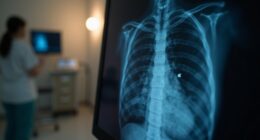
Sure, trials like NLST show LDCT is better than a chest X-ray for heavy smokers. New recommendations now lower screening age average a false-positive rate of 23.3%, the benefits feel a bit overshadowed by the risks.