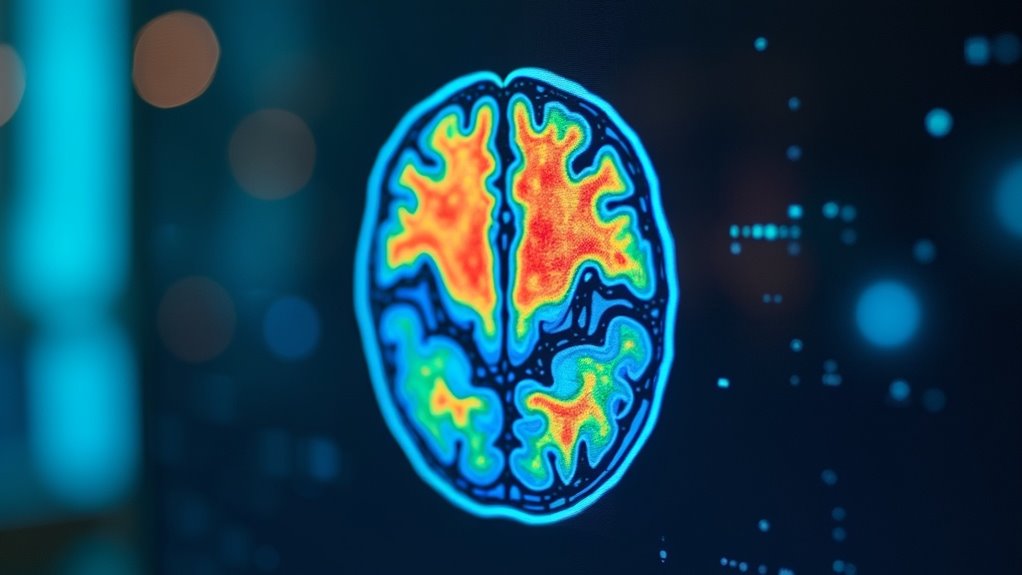

Aging brains. They aren’t just numbers anymore; they’re the focus of some cutting-edge science. Enter the USC 3D-CNN model, a fancy AI tool that dives into MRI scans to figure out how quickly our brains are aging. It’s non-invasive, which is a nice way of saying, “No needles here!” This model has been trained on over 3,000 scans from cognitively normal adults. So, it’s not just guessing.
It takes a longitudinal approach, comparing scans from the same people over time. That means it’s not just a snapshot; it’s like a photo album of brain changes. And those saliency maps? They spotlight the brain regions that really matter when it comes to aging speed. But here’s the twist: they found that the speed of brain aging correlates with changes in cognitive function, especially when looking at groups of healthy individuals and Alzheimer’s patients.
Machine learning is the secret sauce here. With techniques like supervised learning and XGBoost, researchers are extracting patterns from data. It’s like finding the needle in a haystack but with way more math involved. They reviewed 52 studies, trying to make sense of model architectures and their quirks. Talk about a brain workout!
Then there’s neuronal parameter prediction. Dynamic causal modeling predicts age using 37 parameters. That’s a mouthful! It’s all about understanding connections—how neurons talk to each other. As we age, it seems we lose some of that fine-tuned sensitivity. Fun times! Additionally, this research highlights how older brains exhibit robust models of sensory environments, reflecting an optimization in modeling our surroundings over time.
And don’t even get started on structural brain morphometry. This MR-based magic quantifies age-related changes, revealing how our brains morph over time. It’s not just about getting older; it’s about understanding why our brains act the way they do. Faster brain aging correlates with a higher risk of cognitive impairment, making this research particularly important for future health strategies.