Sure! Here’s the revised content with the additional sentence included:
—
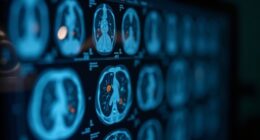
In a world where predicting the future often feels like throwing darts blindfolded, researchers at the University of Florida just might have hit the bullseye with their new AI model. This isn’t your average guessing game; they combined artificial intelligence with a 45-minute MRI scan and achieved a jaw-dropping 94% accuracy in predicting the progression from amnestic mild cognitive impairment to full-blown dementia. You heard that right—94%.
Researchers at the University of Florida have developed an AI model that predicts dementia progression with an astonishing 94% accuracy using just a 45-minute MRI scan.
If that doesn’t sound impressive, consider this: they also managed to pull off 92.7% accuracy with just a 10-minute brain scan. Talk about cutting corners!
The study involved 55 participants, and it’s not just numbers on a page. Fourteen of them developed dementia over 15 months while 41 remained stable. The algorithm pinpointed specific brain areas that set progressors apart from those who stayed stable. It’s like an MRI detective, solving the mystery of who’s at risk. Early identification could even delay Alzheimer’s onset by a year, which could save a bundle in medical costs. Moreover, these advancements align with the growing importance of biomarkers in AD, highlighting how early detection can transform treatment strategies.
But it doesn’t stop there. Other deep learning models are out there, boasting even higher accuracy rates. One model achieved a staggering 99.7% accuracy in classifying Alzheimer’s stages. Yes, you read that correctly—99.7%. These models are not just playing around; they’re redefining the way we look at brain scans.
Sure, some skeptics might roll their eyes. They’ll say “overfitting” or “small sample sizes.” But with independent validation on nearly a thousand patients, this isn’t just a flash in the pan.
The future of Alzheimer’s predictions looks bright, and maybe, just maybe, we’re on the verge of truly understanding this complex disease.