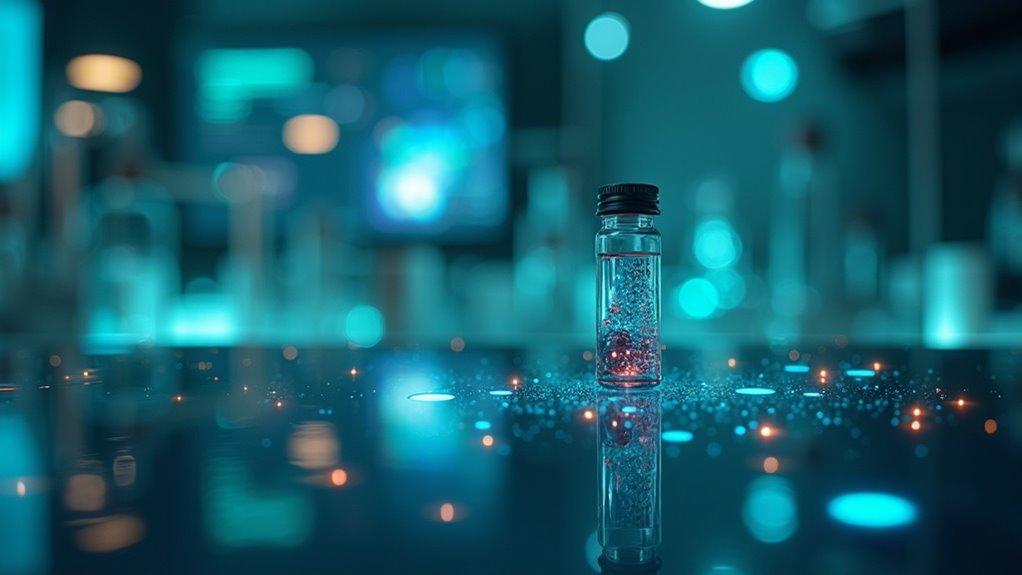

In a world where cancer detection often feels like playing a game of hide and seek, AI-generated sensors are stepping up to change the rules. Imagine a device that can amplify the signals of DNA molecules by over 100 million times. Sounds like magic? Nope. It’s plasmonic materials doing their thing.
These sensors can detect methylated DNA at concentrations as low as 25 femtograms per milliliter. That’s like finding a needle in a haystack, but with just 100 microliters of blood and a swift 20-minute wait. This technology represents a 1,000-fold improvement in sensitivity compared to conventional biosensors.
Detecting methylated DNA is like finding a needle in a haystack—just 100 microliters of blood and a 20-minute wait.
But wait, there’s more! Carbon nanotube sensors, which are about 100,000 times thinner than a human hair, are giving traditional methods a run for their money. They can simultaneously detect multiple molecules and translate those interactions into unique fluorescent patterns. This technology can adapt to detect various cancers without needing specific biomarkers, potentially revolutionizing cancer screening tests.
It’s like a molecular dance party, and AI is the DJ, trained to recognize the cancer fingerprints that nobody wants at their party.
Then there’s the whole AI-driven biomarker detection system. These models sift through complex images and data, correlating visual patterns with genetic alterations.
It’s deep learning at its finest, spotting early-stage cancers faster than a doctor can say “biopsy.” Next-gen sequencing technologies? Yes, please. They work hand-in-hand with AI to guarantee that cancer doesn’t sneak up on anyone uninvited.
Let’s not forget imaging-based detection. AI algorithms analyze CT scans, picking up subtle patterns that might escape even the most trained eyes. Early intervention? Check. Improved survival rates? Double check.
And those handheld devices for skin lesions? They boast a jaw-dropping 96-100% sensitivity.
Breast cancer detection is also getting a facelift, with AI systems outsmarting traditional models. They’re predicting risks like it’s their job, because, well, it is.