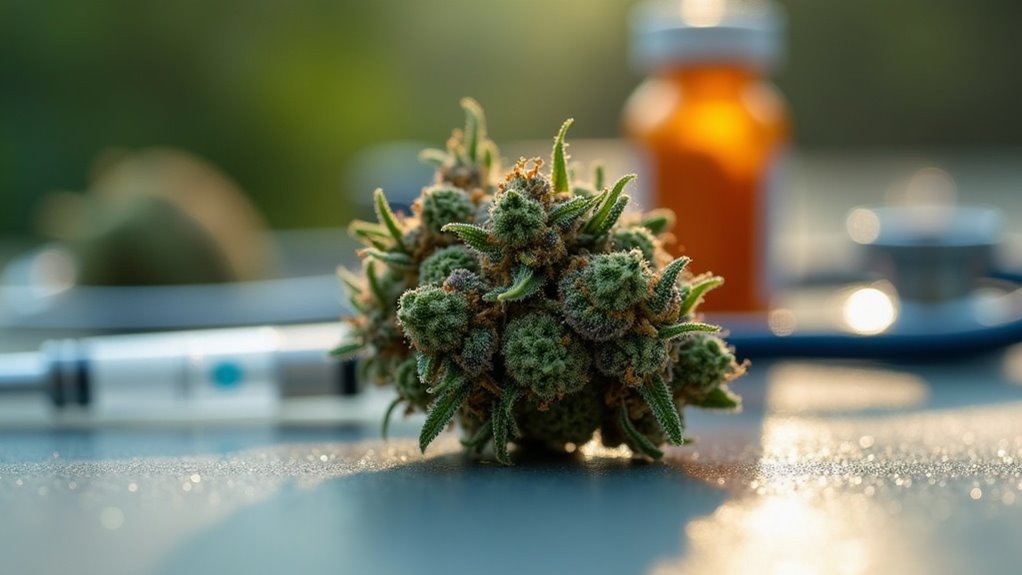

High-THC cannabis is often hailed as a miracle for chronic pain, but it’s not quite the magic bullet some might hope for. Sure, higher THC products offer a slight reduction in chronic pain, particularly when it comes to that pesky neuropathic pain. But let’s be real: the numbers aren’t exactly mind-blowing. Oral THC products like nabilone show moderate benefits, but dronabinol? That’s about as helpful as a screen door on a submarine—providing little to no meaningful improvement.
High-THC cannabis may ease chronic pain a bit, but don’t expect miraculous results—it’s more of a gentle nudge than a cure.
When it comes to multiple sclerosis, things get a bit better. Patients report some relief from spasticity with oral extracts, and nabiximols show promise too. But don’t expect a miracle cure. The improvement in muscle spasms is there, but it’s modest—think of it as a gentle nudge rather than a full-on push. Additionally, studies suggest that CBD’s anti-inflammatory properties can aid in managing chronic pain conditions, providing a complementary approach to treatment.
And let’s not forget the fun side effects. Higher THC means higher risks—hello, altered thinking and feelings! It can mess with your heart, and long-term use? That’s a one-way ticket to lung issues or cannabinoid hyperemesis syndrome, a fancy term for a nasty condition.
Now, let’s talk about THC versus CBD. High THC/CBD ratios might give you a smidge of pain relief, but low THC or CBD-only products? Yeah, they don’t do much. THC gets you high, while CBD stays sober and reduces inflammation. The two don’t exactly play nice together.
And what about nausea from chemotherapy? THC can help, especially when standard meds fail. It might even spark some appetite for those struggling with cancer treatment side effects. But again, the safety concerns loom large. Potency is climbing while research on safety lags behind.