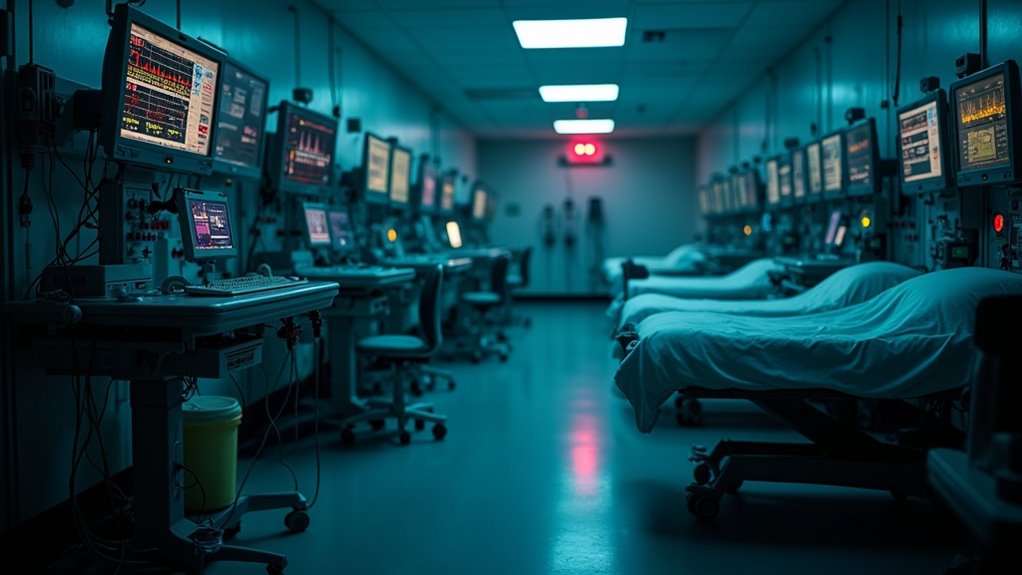

Alarm fatigue is a regular nightmare for ICU nurses. Imagine this: they’re surrounded by beeping machines, alarms going off like a bad rock concert. Studies show that ICU nurses score between 24 to 29 on alarm fatigue scales. That’s moderate to high fatigue. And guess what? A whopping 63.8% of those alarms? Yeah, false. Just noise. Just distractions.
Alarm fatigue plagues ICU nurses, drowning them in a sea of false alarms—63.8% are just noise, adding to their chaos.
So, what’s causing this chaos? Well, you have alarm systems that are overly sensitive, set to thresholds that are tighter than a drum. Poor EKG placements and misconfigured settings don’t help either. Add environmental factors like not knowing where the alarm is coming from, and it’s a recipe for disaster. Night shifts? They’re even worse. When the workload spikes, the alarms seem to multiply like rabbits. And let’s not even start on staff training. Or the lack thereof. The current workforce shortages in healthcare exacerbate these challenges, leaving nurses feeling even more overwhelmed.
The impact? It’s not pretty. Alarm fatigue contributes to emotional labor and even poor health. Nurses are already juggling a million responsibilities, and this incessant noise just adds to the cognitive load. The result? Slower responses to critical alarms and a higher chance of making medical errors. Yes, a direct correlation exists—more fatigue, more mistakes. It’s a vicious cycle. Alarm fatigue is linked to work competence; on average, nurses encounter around 1,000 alarms in a single shift, with a large percentage being clinically insignificant.
Nurses with families, especially those working the dreaded night shifts, report feeling the effects more acutely. Experienced nurses? They’re not immune either. Years in the ICU can lead to desensitization, meaning they might just shrug off alarms that need urgent attention. Oh joy. Moreover, the number of night shifts worked directly correlates with increased alarm fatigue, compounding the issue.
And let’s talk about burnout. It’s real. Constant exposure to alarm noise leads to physical exhaustion and cognitive decline. Depersonalization becomes the norm.
It’s a tough gig, and alarm fatigue is a big player in the burnout game. ICU nurses are in a battle, and alarm fatigue is one of the fiercest opponents.