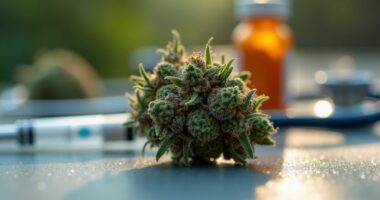

In a development that might make Big Pharma squirm, medical cannabis appears to be cutting into opioid use among cancer patients. Recent data shows opioid use days dropped across multiple cancer types after medical marijuana legalization. Breast cancer patients saw a decline from 90.1% to 84.4%. Colorectal cancer patients dropped from 89.4% to 84.4%. Lung cancer patients experienced the most dramatic shift, falling from 33.8% to 27.2%.
Medical cannabis is slashing opioid dependency rates across cancer types, with lung cancer patients seeing the most dramatic 27% drop.
The numbers get more interesting when you dig deeper. Lung cancer patients without recent opioid use showed a 19.2% relative decline—the biggest drop of all groups studied. Those with recent opioid use saw their long-acting opioid day rate plummet from 31.5% to 22.1%, a nearly 30% relative decrease. Pain-related hospital events also declined from 19.3% to 13.0% among this group. Remote patient monitoring systems have shown promising results in tracking these reductions across various healthcare settings.
Surveys reveal that roughly 64% of cancer patients using medical cannabis reported decreased opioid use. Some even ditched their anxiety medications entirely—about 25% stopped anxiolytic prescriptions. Not exactly what pharmaceutical executives want to hear at board meetings.
Clinical trials with nabiximols, those THC:CBD sprays, showed patients needed fewer breakthrough pain medications compared to placebo. Quality of life measures improved too. Seventy percent of patients stuck with cannabis treatment after one month, and 66% of those reported symptom improvement.
The relief extended beyond pain. Nausea, sleep disorders, anxiety, depression, and headaches all showed improvement. Side effects were mostly mild—dizziness, coughing, tiredness. No serious adverse effects popped up in major studies.
Researchers tested various forms: THC oil capsules, oromucosal sprays. Oral versus inhaled delivery didn’t notably change effectiveness for pain relief. High-THC products were typically inhaled, while CBD or mixed varieties went oral. Preclinical studies show cannabinoids work through endocannabinoid pathways that are completely separate from opioid mechanisms.
Here’s the catch: most evidence comes from observational studies, not gold-standard randomized controlled trials. No definitive causal proof yet. Benefits varied by cancer type and previous opioid history. Product variability and individual patient differences complicate generalizing results.
Still, the pattern is hard to ignore. Medical cannabis might actually substitute for opioids in cancer care. Researchers are calling for longitudinal, controlled trials to nail down what’s really happening.