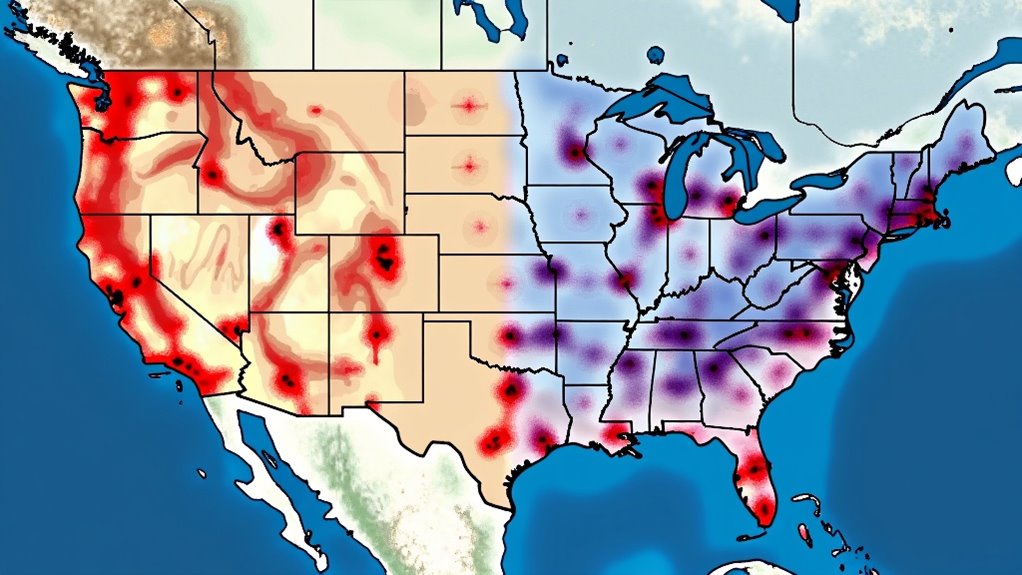
For decades, researchers missed something hiding in plain sight. ALS and MS, two devastating neurological diseases that seemed completely unrelated, share an uncanny geographic pattern. The correlation is jaw-dropping—over 70% when you break down the data properly.
Two seemingly unrelated neurological diseases hiding a stunning 70% correlation that researchers completely missed for decades.
Here’s the kicker: nobody saw it coming because of a statistical trick called Simpson’s Paradox. ALS hits men harder. MS prefers women. When scientists lumped everyone together, the connection vanished like smoke. But separate the data by gender? Boom. The pattern jumps out clear as day.
Heat maps of US disease distribution tell the story visually. ALS and MS hotspots align across regions with startling precision. This isn’t some weak association either—it’s stronger than the famous latitude patterns researchers have studied for years.
North Europe sees 1.89 ALS cases per 100,000 people annually. East Asia? Just 0.83. South Asia drops to 0.73. The geographic variation is massive. Similar to how climate change effects are reshaping disease patterns globally, these neurological conditions show distinct regional clustering.
The Faroe Islands offer a perfect example of environmental chaos. After WWII military occupation, MS cases exploded. Coincidence? Unlikely.
Scientists are scrambling to explain what’s happening. Environmental factors top the suspect list. Chemical contamination, agricultural practices, mining operations—all show uneven geographic distribution. The analysis controlled for race and wealth to ensure these demographic factors weren’t driving the observed patterns.
Natural culprits aren’t off the hook either. Viruses, parasites, algae blooms, and molds each have their own geographic preferences.
Some clusters get ridiculously specific. We’re talking neighborhoods. Individual buildings. Married couples living in the same house develop these diseases at suspicious rates. That screams shared environmental exposure.
The vitamin D hypothesis had its moment in the spotlight. UV exposure varies by latitude, which seemed to explain MS patterns. But supplementation studies? Mixed results at best. Back to the drawing board.
What’s particularly maddening is how obvious this connection was once researchers knew where to look. Major studies missed it entirely because they didn’t separate men and women in their analyses. The recent analysis used CDC WONDER mortality data to avoid the incompleteness and voluntary-report bias inherent in disease registries. Sometimes the most important discoveries require the simplest approach: just organize your data differently.
The geographic evidence is now undeniable. ALS and MS share something significant in their environmental triggers. Finding that shared factor could open up treatment possibilities for both diseases.